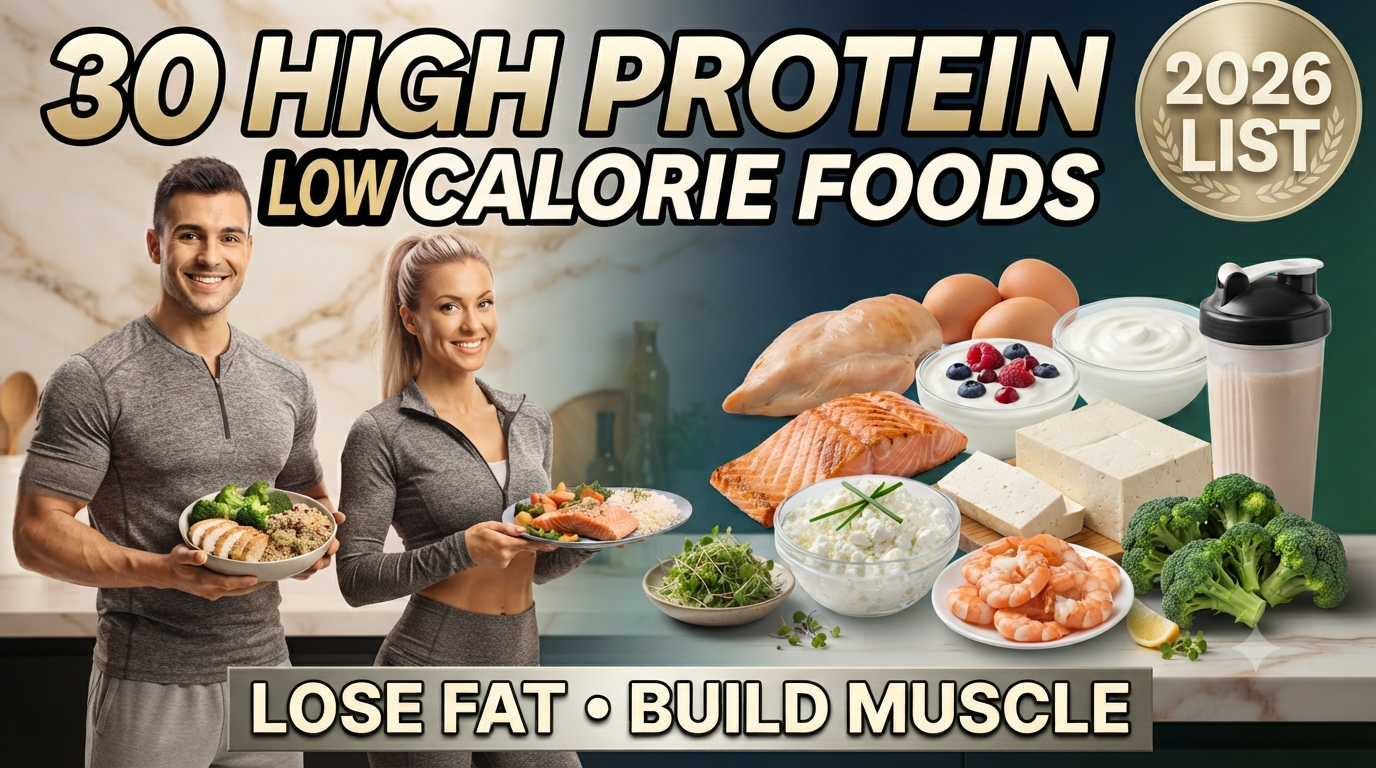
If you’re trying to lose fat without losing muscle, the foods you choose matter just as much as the calories you cut. High protein low calorie foods let you eat satisfying portions, stay full for longer, and protect lean muscle — all while keeping your daily calorie total in check.
Below is a complete, USDA-backed list of the best high protein low calorie foods, organized by category, plus practical tips on how to build them into a real diet plan. If you haven’t yet figured out your personal calorie and protein targets, start with our free daily diet calculator — it calculates your BMR, TDEE, and macros in under a minute, so you know exactly how much protein you need before you start shopping.
Table of Contents
Why Protein-to-Calorie Ratio Matters More Than Protein Alone
A food isn’t “high protein” just because it has a big protein number on the label — it’s high protein relative to its calories. A food with 25g of protein for 120 calories is doing far more work for your diet than one with 25g of protein packed into 400 calories.
According to the Harvard T.H. Chan School of Public Health’s Nutrition Source, protein is an essential macronutrient built from amino acids that your body uses to repair tissue, produce enzymes, and maintain muscle — but not all protein sources come with the same calorie “cost.” Choosing lean, minimally processed sources is what makes a high-protein diet also a low-calorie one.
This is also why protein is central to the calorie deficit approach to weight loss: the higher your protein intake within a deficit, the more of the weight you lose tends to come from fat rather than muscle.
The Complete List of High Protein, Low Calorie Foods
All values below are per 100g cooked/edible portion and sourced from USDA FoodData Central, the U.S. government’s public nutrient database.
Lean Animal Proteins
| Food | Calories (per 100g) | Protein (per 100g) |
|---|---|---|
| Chicken breast, skinless | ~165 | 31g |
| Turkey breast, skinless | ~135 | 30g |
| Cod | ~90 | 20g |
| Tilapia | ~96 | 20g |
| Haddock | ~90 | 21g |
| Shrimp | ~99 | 24g |
| Tuna (canned in water) | ~116 | 26g |
| Egg whites | ~52 | 11g |
| Bison, lean | ~146 | 22g |
| 93%+ lean ground beef | ~152 | 22g |
Dairy and Dairy Alternatives
| Food | Calories (per 100g) | Protein (per 100g) |
|---|---|---|
| Nonfat Greek yogurt, plain | ~59 | 10g |
| Low-fat cottage cheese | ~72 | 12g |
| Skim milk | ~34 | 3.4g |
| Part-skim ricotta | ~138 | 11g |
Plant-Based Proteins
| Food | Calories (per 100g) | Protein (per 100g) |
|---|---|---|
| Lentils, cooked | ~116 | 9g |
| Chickpeas, cooked | ~164 | 9g |
| Edamame | ~121 | 11g |
| Firm tofu | ~76 | 8g |
| Black beans, cooked | ~132 | 9g |
| Tempeh | ~192 | 20g |
Other Notable Options
- Protein powder (whey or plant-based): typically 100–130 calories for 20–25g of protein per scoop — useful for hitting targets without adding much volume.
- Seitan: ~370 calories but 75g of protein per 100g. Very calorie-dense in absolute terms, but extremely efficient per gram — best used in smaller portions.
- White fish fillets in general: almost anything in the cod/haddock/pollock family lands in the 85–100 calorie, 19–23g protein range.
How to Build a Meal Plan Around These Foods
Knowing the list is only half the job — the real value comes from matching these foods to your actual calorie and protein needs. Here’s a simple process:
- Calculate your numbers first. Use the TDEE calculator to find your total daily energy expenditure, then apply a moderate deficit if fat loss is the goal.
- Set a protein target. A common range for people in a calorie deficit is 1.2–1.6g of protein per kilogram of body weight, which aligns with recent U.S. Dietary Guidelines recommendations for protein intake.
- Anchor each meal with a lean protein from the list above, then build the rest of the plate around high-volume, low-calorie vegetables.
- Track and adjust. Recalculate your needs every 5–10 lbs of weight change using the free calorie calculator.
If you’re starting from scratch, our guide on how to start a diet plan walks through the full setup step by step.
High Protein Low Calorie Snacks
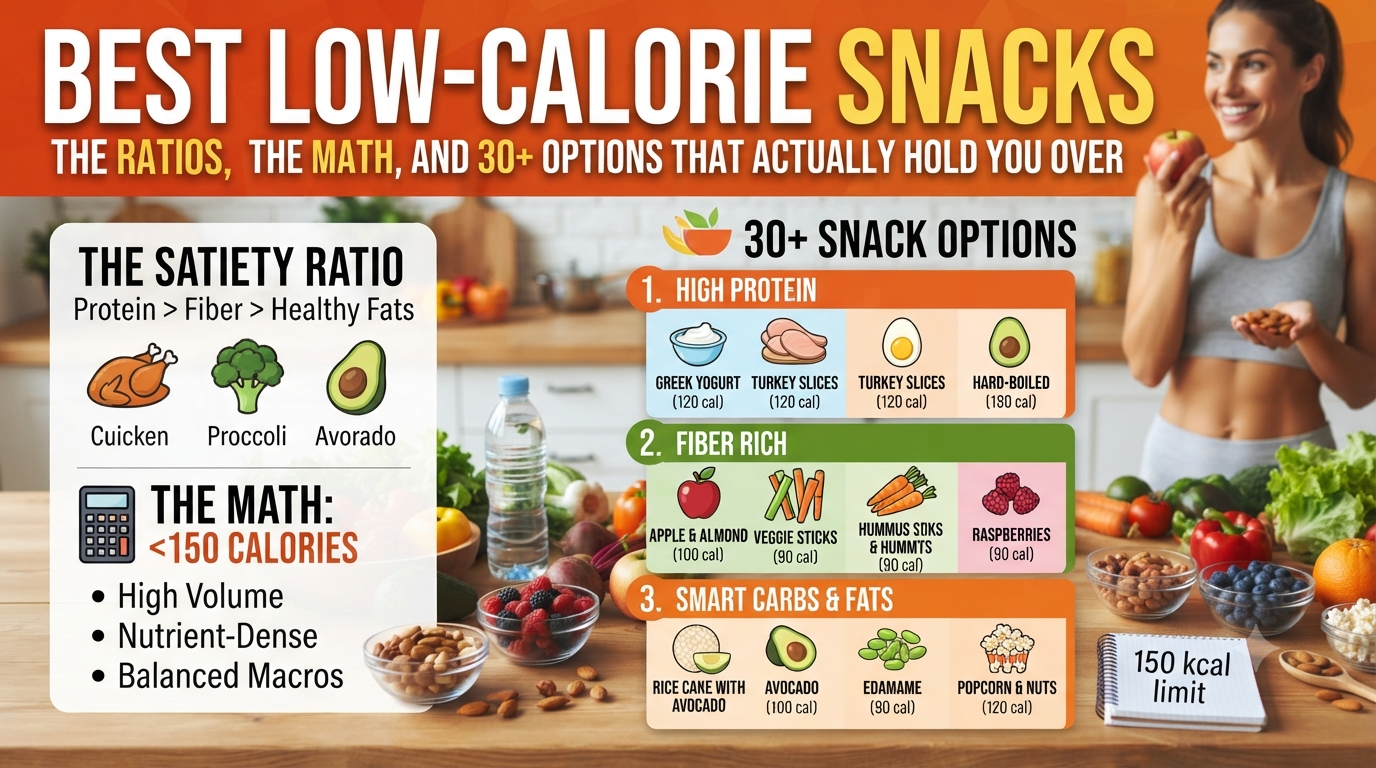
Healthy high protein low calorie snacks can help control hunger between meals without adding unnecessary calories. Options such as nonfat Greek yogurt, cottage cheese, boiled egg whites, roasted edamame, turkey slices, or protein shakes provide lasting fullness while supporting muscle maintenance. Choosing snacks rich in protein makes it easier to stay within your daily calorie target and reduce cravings.
High Protein Low Calorie Foods Vegetarian
Vegetarians have plenty of high protein low calorie food choices that fit a healthy eating plan. Tofu, tempeh, edamame, lentils, chickpeas, low-fat cottage cheese, and nonfat Greek yogurt all provide valuable protein with relatively modest calorie content. Combining different plant-based protein sources throughout the day also helps create balanced, filling meals that support overall nutrition.
High-Protein Low-Calorie Foods Breakfast
A protein-rich breakfast can reduce mid-morning hunger and make it easier to stay on track throughout the day. Egg white omelets, nonfat Greek yogurt with berries, protein oatmeal, cottage cheese, or smoothies made with protein powder are excellent choices. Starting your morning with adequate protein also supports muscle recovery and promotes longer-lasting fullness.
Tips for Keeping These Foods Genuinely Low Calorie
The foods above are only low calorie if you prepare them that way. A few things to watch for:
- Cooking method matters. Grilling, baking, steaming, and poaching add little to no calories. Frying, breading, and heavy sauces can double or triple the calorie count of an otherwise lean protein.
- Portion size still counts. Even a lean food adds up in large quantities — weighing cooked portions is more accurate than eyeballing.
- Watch add-ons. Cheese, creamy dressings, oils, and marinades are often where the “low calorie” label quietly disappears.
- Combine with volume foods. Pairing lean protein with fibrous vegetables like spinach, broccoli, or zucchini increases meal volume and fullness without meaningfully increasing calories.
Frequently Asked Questions
What is the highest protein food with the fewest calories? Egg whites and white fish (cod, tilapia, haddock) offer some of the best ratios, delivering roughly 20g of protein for under 100 calories per 100g serving.
How much protein do I actually need per day? This depends on your body weight, activity level, and goals. The Harvard Health Publishing guide to daily protein needs notes that requirements can range from a baseline RDA of 0.8g/kg up to 1.6g/kg or more for people who are active or in a calorie deficit. Our daily diet calculator will calculate a personalized target for you based on your stats and goal.
Can I get enough protein on a plant-based diet while staying low calorie? Yes. Lentils, chickpeas, edamame, tofu, and tempeh all offer solid protein-to-calorie ratios, though you may need slightly larger portions than animal sources to hit the same protein gram target.
Is it possible to eat too much protein? For most healthy adults, moderately high protein intake is well tolerated. That said, people with kidney conditions or other health concerns should check with a doctor before significantly increasing protein intake.
Put This List to Work
The fastest way to turn this list into results is to know your numbers first. Head over to the daily diet calculator to get your personalized calorie and protein targets, then use the food lists above to build meals that keep you full, on track, and moving toward your goal.
5 thoughts on “30 High Protein Low Calorie Foods for Weight Loss (2026 List)”