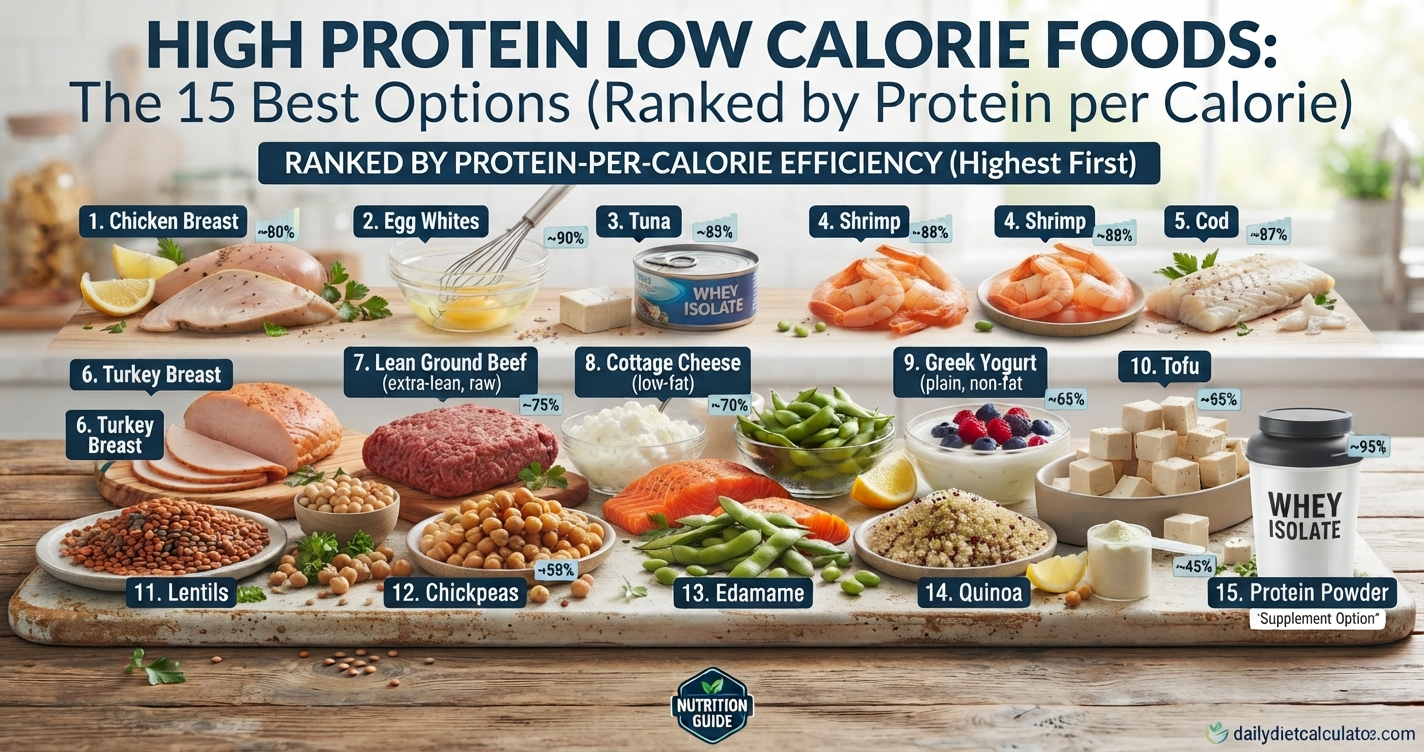
If you’re trying to lose weight without feeling hungry all day, high protein low calorie foods are the most useful tool you have. Protein keeps you fuller for longer, helps you hold on to muscle while you eat in a calorie deficit, and costs your body more energy to digest than carbs or fat.
The problem? Most lists just name foods without telling you how they actually compare. This guide ranks the best low calorie, high protein foods by grams of protein per calorie, so you can see at a glance which ones give you the most for the least.
Quick answer: The leanest protein sources are egg whites, shrimp, white fish like cod, turkey breast, canned tuna, and chicken breast. For dairy, nonfat Greek yogurt and low-fat cottage cheese lead the pack.
Know your numbers first. How much protein and how many calories you need depends on your body and goals. Use our free TDEE calculator to find your daily calorie target, then use the foods below to fill it smartly.
Table of Contents
Why Protein Matters When You’re Cutting Calories
Three reasons high protein foods work so well for fat loss:
- They keep you full. Protein is the most satiating macronutrient, which makes a calorie deficit easier to stick to.
- They protect muscle. When you eat less, your body can burn muscle along with fat. Enough protein, especially paired with strength training, helps prevent that.
- They burn more to digest. Your body uses more energy digesting protein than carbs or fat (the “thermic effect of food”).
If you want the full picture on how a deficit works, read our guide to the calorie deficit.
Quick-Reference Chart: High Protein, Low Calorie Foods
Values are approximate, per 100 g (about 3.5 oz), and based on typical cooked or plain preparations. Brands and cuts vary, so always check your label.
| Food | Calories | Protein | Protein per calorie |
|---|---|---|---|
| Shrimp (cooked) | ~99 | ~24 g | 0.24 g |
| Cod (cooked) | ~105 | ~23 g | 0.22 g |
| Turkey breast (roasted, skinless) | ~135 | ~30 g | 0.22 g |
| Canned tuna in water (drained) | ~116 | ~26 g | 0.22 g |
| Egg whites | ~52 | ~11 g | 0.21 g |
| Tilapia (cooked) | ~128 | ~26 g | 0.20 g |
| Chicken breast (cooked, skinless) | ~165 | ~31 g | 0.19 g |
| Nonfat plain Greek yogurt | ~59 | ~10 g | 0.17 g |
| Low-fat (1%) cottage cheese | ~72 | ~12 g | 0.17 g |
| Edamame (shelled) | ~121 | ~12 g | 0.10 g |
| Lentils (cooked) | ~116 | ~9 g | 0.08 g |
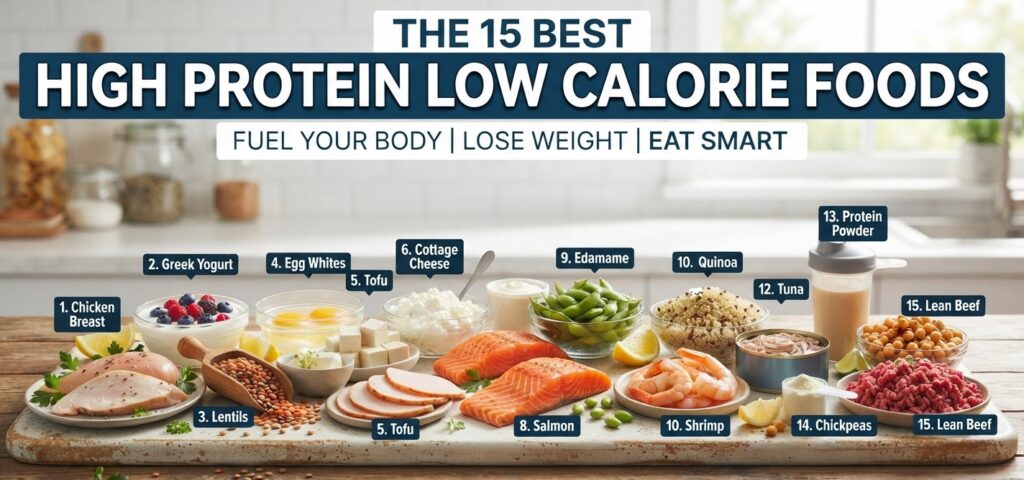
The 15 Best High Protein Low Calorie Foods
1. Shrimp
The leader on protein per calorie. A 100 g serving has roughly 24 g of protein for under 100 calories. It cooks in minutes and works in stir-fries, salads, and wraps.
2. White Fish (Cod, Tilapia, Haddock)
Mild, lean, and quick to cook. Cod gives you about 23 g of protein for around 105 calories per 100 g. Bake, pan-sear, or air-fry with lemon and herbs.
3. Turkey Breast
Skinless turkey breast delivers around 30 g of protein per 100 g. Sliced deli turkey is convenient, but check labels for sodium.
4. Canned Tuna (in Water)
Cheap, shelf-stable, and high in protein. Choose tuna packed in water to keep calories low, and mix it with Greek yogurt instead of mayo for a lighter tuna salad.
5. Egg Whites
About 11 g of protein for roughly 52 calories per 100 g, with almost no fat. Scramble them with vegetables or add them to whole-egg omelets to bulk up protein without many extra calories.
6. Chicken Breast
The classic. Around 31 g of protein per 100 g cooked. It’s versatile, easy to batch-cook, and pairs with almost anything.
7. Nonfat Greek Yogurt
Thick, creamy, and about 10 g of protein per 100 g for roughly 59 calories. Great for breakfast, snacks, or as a sour cream swap. Pick plain and add your own fruit.
8. Low-Fat Cottage Cheese
Around 12 g of protein per 100 g. Eat it with fruit, on toast, or blended into sauces for extra creaminess.
9. Lean White Meats and Trimmed Cuts
Lean cuts of pork loin and beef (like top round or sirloin with visible fat trimmed) can fit a calorie deficit when portions are controlled.
10. Edamame
A solid plant-based option with about 12 g of protein per 100 g, plus fiber that adds to fullness.
11. Lentils
Lower in protein per calorie than meat, but high in fiber and very filling. Good for soups, curries, and salads.
12. Chickpeas and Beans
Budget-friendly and fiber-rich. They won’t top the protein-per-calorie chart, but they make meals more filling.
13. Tofu and Tempeh
Handy plant proteins for vegetarians and vegans. Protein and calories vary by brand and firmness, so check the label.
14. Skim Milk and Unsweetened Soy Milk
Easy ways to add a few grams of protein to coffee, oats, or smoothies for few calories.
15. Protein Powder (Whey Isolate or Plant-Based)
A typical scoop gives roughly 20 to 25 g of protein for about 100 to 130 calories. It isn’t a “whole food,” but it’s useful when you’re short on protein or on the go.
How to Build High Protein, Low Calorie Meals
You don’t need a complicated plan. Use this simple formula:
Lean protein + lots of vegetables + a small portion of smart carbs + a little healthy fat.
Easy meal ideas
- Breakfast: Egg-white and veggie scramble with a slice of whole-grain toast
- Breakfast (quick): Nonfat Greek yogurt with berries
- Lunch: Chicken breast salad with a light vinaigrette
- Lunch (budget): Tuna and Greek yogurt wrap with crunchy vegetables
- Dinner: Baked cod with roasted vegetables and a small serving of rice
- Dinner (plant-based): Lentil and vegetable curry
- Snack: Cottage cheese with sliced cucumber, or edamame with sea salt
Want these built into a full day? See our 1200-calorie meal plan and 1800-calorie meal plan, or track what you eat with our food calorie calculator.
How Much Protein Do You Actually Need?
A common starting range for active adults trying to lose fat is roughly 0.7 to 1 gram of protein per pound of body weight per day (about 1.6 to 2.2 g per kg). Needs vary with age, activity, health conditions, and goals, so treat this as a starting point rather than a rule.
Not sure how many calories you should eat? Our guide on how many calories you should eat to lose weight walks you through it.
Common Mistakes to Avoid
- Eating too few calories. Extremely low calorie plans can backfire, cause muscle loss, and be hard to sustain. Don’t go below the minimum your doctor or dietitian recommends.
- Ignoring fiber and vegetables. Protein alone won’t make a balanced diet.
- Trusting “high protein” labels blindly. Some bars and snacks are high in protein but also loaded with sugar and calories. Read the nutrition panel.
- Forgetting cooking oils and sauces. A tablespoon of oil adds about 120 calories, which can erase the advantage of a lean protein.
Frequently Asked Questions
What foods are high in protein and low in calories?
Shrimp, white fish like cod, turkey breast, canned tuna, egg whites, chicken breast, nonfat Greek yogurt, and low-fat cottage cheese all offer a lot of protein for relatively few calories.
What is the lowest calorie high protein food?
By protein per calorie, shrimp, cod, turkey breast, tuna, and egg whites are among the very best. Egg whites have the fewest calories per 100 g of this group.
What are good vegetarian high protein low calorie foods?
Nonfat Greek yogurt, low-fat cottage cheese, egg whites, edamame, lentils, tofu, and tempeh are good vegetarian options. Vegans can rely on edamame, lentils, beans, tofu, tempeh, and plant-based protein powder.
Can I lose weight by eating more protein?
Higher protein intake can make a calorie deficit easier to follow because it helps you feel full and helps preserve muscle. Weight loss still depends on eating fewer calories than you burn overall.
Is chicken breast the best high protein low calorie food?
It’s one of the most popular, but not the leanest per calorie. Shrimp, cod, and egg whites give slightly more protein per calorie, though chicken is hard to beat for versatility and cost.
The Bottom Line
The best high protein low calorie foods are lean, simple, and easy to cook: shrimp, white fish, turkey, tuna, egg whites, chicken, Greek yogurt, and cottage cheese. Build your meals around them, fill your plate with vegetables, and match your portions to your own calorie target.
Next step: Find your personal calorie and macro numbers with our TDEE calculator, then plan your day with the food calorie calculator.
This article is for general information and isn’t medical advice. Talk to a doctor or registered dietitian before making major changes to your diet, especially if you have a health condition.