Written by the nutrition team at Daily Diet Calculator — your free tool for personalized calorie and macro targets.
If you’ve spent any time researching healthy eating patterns, you’ve probably noticed one diet keeps showing up at the top of every list: the Mediterranean diet. It isn’t a fad, it isn’t restrictive, and for the ninth year running it has topped U.S. News & World Report’s ranking of the best overall diets — scoring highly for heart health, diabetes prevention, gut health, and ease of use.
In this guide, we’ll cover exactly what the Mediterranean diet is, a full mediterranean diet food list, a sample mediterranean diet meal plan (including a mediterranean diet breakfast), the real mediterranean diet benefits, whether it works for mediterranean diet for weight loss, easy mediterranean diet recipes to start with, and where to find a mediterranean diet pdf to keep on hand. We’ll also touch on what people are saying about it over on mediterranean diet reddit communities.
Table of Contents
What Is the Mediterranean Diet?
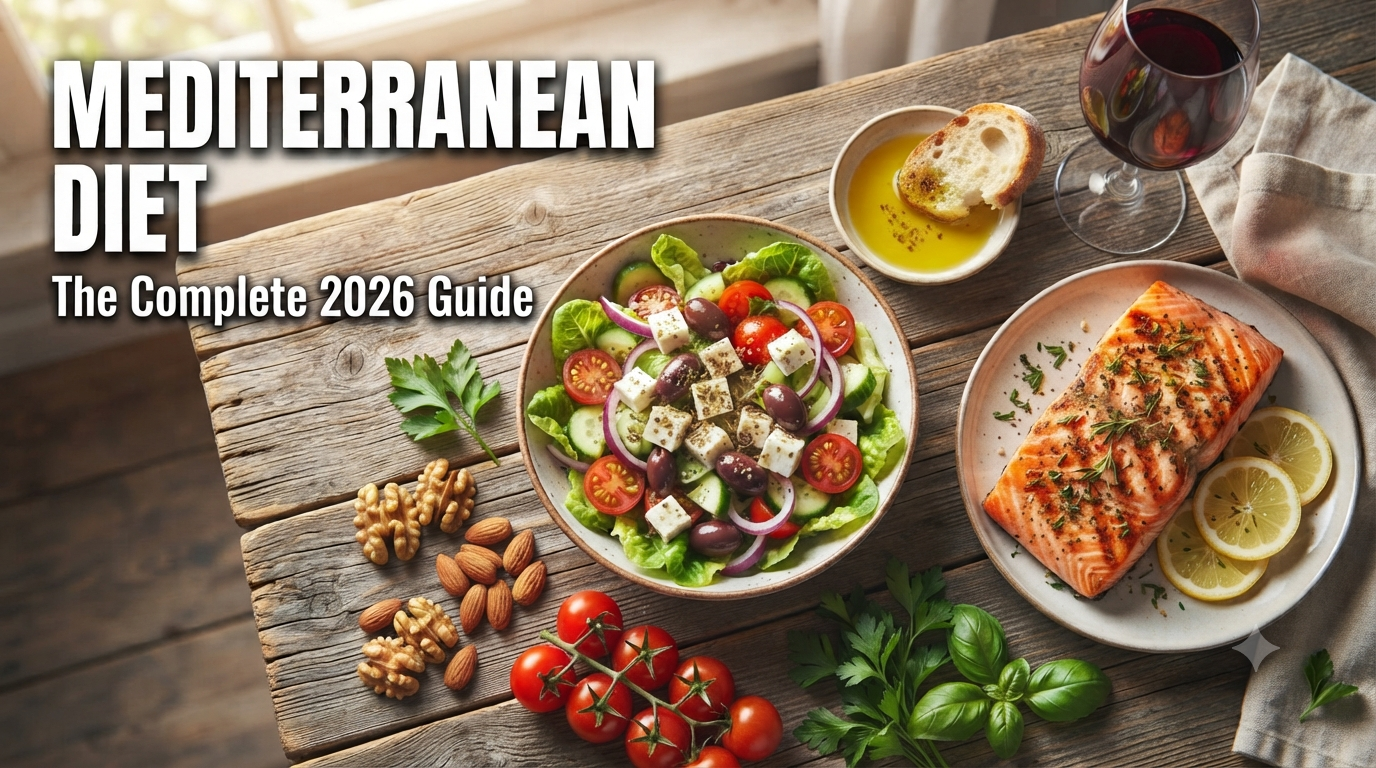
The Mediterranean diet is an eating pattern based on the traditional foods and cooking styles of countries bordering the Mediterranean Sea — think Greece, Italy, Spain, and southern France. Rather than banning food groups or counting every gram, it’s built around whole, minimally processed foods: vegetables, fruit, whole grains, legumes, nuts, and olive oil, with fish and seafood featured regularly and red meat kept to a minimum.
The pattern traces back to research from the 1960s, when scientists studying Mediterranean populations noticed people there experienced fewer deaths from cardiovascular disease compared with people in the U.S. and northern Europe, according to Mayo Clinic. That early observation launched decades of follow-up research, and today the pattern is one of the eating plans recommended by the Dietary Guidelines for Americans to help prevent chronic disease, per Mayo Clinic Health System.
It’s worth noting there isn’t one single “official” version of the Mediterranean diet — it’s more of a flexible framework than a rulebook, which is a big part of why it’s so sustainable long-term.
If you’re already tracking your intake, you can plug your numbers into our free calorie calculator to see how a Mediterranean-style plate fits your daily targets.
Mediterranean Diet Food List
Here’s a practical breakdown of what to eat often, moderately, and rarely.
Eat daily:
- Vegetables (aim for a wide variety and color)
- Fruit
- Whole grains (whole-wheat bread, brown rice, farro, bulgur)
- Legumes (lentils, chickpeas, beans)
- Nuts and seeds
- Extra-virgin olive oil (the primary fat source)
- Herbs and spices in place of salt
Eat weekly:
- Fish and seafood, especially fatty fish like salmon, sardines, mackerel, and tuna — most guidance, including U.S. News’ beginner’s guide, recommends eating fish at least twice a week
- Poultry, eggs, and moderate portions of yogurt and cheese
Eat rarely (a few times a month):
- Red meat and processed meat
- Sweets, sugary drinks, and refined grains
- Butter (swap for olive oil)
Optional:
- Wine in moderation with meals, if you already drink alcohol — this is not a recommendation to start drinking for health reasons
Building meals around this list pairs naturally with our diet plan high protein approach if your goal is muscle retention while eating this way — legumes, fish, and Greek yogurt all pull double duty as Mediterranean staples and solid protein sources.
Mediterranean Diet Meal Plan (Sample Day)
You don’t need a rigid menu to eat Mediterranean-style, but a template helps when you’re starting out.
Mediterranean diet breakfast Greek yogurt topped with berries, a drizzle of honey, and a small handful of walnuts. Or: whole-grain toast with mashed avocado, tomato, and a soft-boiled egg.
Lunch A big salad of mixed greens, cucumber, chickpeas, olives, and feta, dressed with olive oil and lemon, alongside a piece of whole-grain bread.
Dinner Baked salmon with roasted vegetables and a side of quinoa or farro, finished with fresh herbs and a squeeze of lemon.
Snacks A handful of almonds, fresh fruit, or hummus with raw vegetables.
Because everyone’s calorie needs differ based on age, activity level, and goals, use our daily diet calculator to find your target calories first, then build a Mediterranean-style day around that number rather than following someone else’s fixed meal plan.
Easy Mediterranean Diet Recipes to Start With
You don’t need advanced cooking skills to eat this way. A few beginner-friendly Mediterranean diet recipes:
- One-pan Greek chicken and vegetables — chicken thighs roasted with zucchini, bell peppers, and red onion, tossed in olive oil, oregano, and lemon
- Lentil and vegetable soup — lentils, carrots, celery, and tomatoes simmered with garlic and cumin
- Tuna and white bean salad — canned tuna, cannellini beans, red onion, parsley, and olive oil
- Shakshuka — eggs poached in a spiced tomato and pepper sauce, ideal for a Mediterranean diet breakfast or light dinner
The common thread: vegetables and legumes as the base, olive oil as the fat, and herbs/spices instead of heavy sauces or salt.
Mediterranean Diet Benefits
The evidence behind this eating pattern is unusually deep, spanning decades of observational studies and randomized trials. Some of the most well-documented mediterranean diet benefits:
Heart health. The landmark PREDIMED trial found that people following a Mediterranean diet enriched with extra-virgin olive oil or nuts had roughly a 30% lower risk of major cardiovascular events compared with a control diet, a finding highlighted in the Mayo Clinic Diet’s review of the research. More broadly, studies have repeatedly shown the diet reduces heart disease risk by lowering LDL cholesterol and improving blood pressure.
Brain health. The diet’s antioxidants and omega-3 fatty acids have been linked to better memory and focus, with some research pointing to a reduced risk of Alzheimer’s disease.
Diabetes and metabolic health. Its emphasis on fiber-rich, low-glycemic foods helps stabilize blood sugar and improve insulin sensitivity, which is one reason it’s frequently recommended alongside — or instead of — more restrictive diabetes diets.
Longevity and healthy aging. Research has linked the Mediterranean diet to reduced risk of stroke, diabetes, certain cancers, and Alzheimer’s and Parkinson’s diseases, according to Mayo Clinic Health System, and it’s a recurring feature in studies of “Blue Zone” populations known for long lifespans.
Overall recognition. In its most recent rankings, the Mediterranean diet topped U.S. News & World Report’s best-diets list for the eighth year running, scoring 4.8 out of 5 for nutritional completeness, health risk reduction, sustainability, and evidence-based effectiveness, and also took the top spot in categories including gut health, weight loss, and mental health, as reported by ABC News.
Mediterranean Diet for Weight Loss
The Mediterranean diet was never designed as a weight-loss protocol, but it works well for weight management for a simple reason: it’s built around fiber-rich, nutrient-dense foods that promote satiety, as the Mayo Clinic Diet notes, so people naturally eat fewer excess calories without obsessive tracking.
That said, weight loss still comes down to energy balance — if fat loss is your goal, you’ll want to eat this way while in a moderate calorie deficit. Here’s how to combine the two:
- Use our free calorie calculator to find your maintenance calories (TDEE).
- Apply a modest deficit — our calorie deficit calculator guide walks through how to do this safely, typically around 500 calories per day for gradual, sustainable fat loss.
- Fill that calorie budget with Mediterranean staples: vegetables, legumes, fish, olive oil, and whole grains, which fill you up on fewer calories than processed alternatives.
- Keep protein adequate to preserve muscle mass during the deficit — legumes, fish, poultry, and Greek yogurt all help here.
If you’re brand new to structured eating, our step-by-step guide to starting a diet plan is a good companion to this article — it covers the basics of building sustainable habits before adding a specific eating pattern like Mediterranean on top.
What People Are Saying: Mediterranean Diet Reddit Communities
Search “mediterranean diet reddit” and you’ll find active communities in subreddits like r/MediterraneanDiet and general nutrition forums like r/nutrition and r/loseit. Common themes in these discussions:
- Many users report the diet feels more like “just eating normal food” than a restrictive plan, which helps with long-term adherence
- Meal prep threads frequently mention batch-cooking lentils, roasted vegetables, and grain bowls for the week
- A recurring question is whether wine is required — it isn’t; it’s an optional, culturally traditional component, not a health requirement
- Budget-conscious users often ask about cost, and the general consensus is that buying dried legumes, seasonal produce, and canned fish keeps the diet affordable
As with any online health community, treat anecdotes as motivation rather than medical advice, and check claims against sources like Harvard’s Nutrition Source or Mayo Clinic before acting on them.
Mediterranean Diet PDF and Printable Resources
If you want a mediterranean diet pdf to keep on your fridge or phone, two of the most trusted free resources are:
- Harvard T.H. Chan School of Public Health’s Nutrition Source — a detailed diet review with the Mediterranean diet pyramid and research citations (nutritionsource.hsph.harvard.edu)
- Mayo Clinic Health System — offers a downloadable Mediterranean Diet Pyramid guide for adults (mayoclinichealthsystem.org)
Both are free, medically reviewed, and a good reference point once you’ve read this guide.
Frequently Asked Questions
Is the Mediterranean diet good for weight loss? Yes — while it isn’t a weight-loss diet by design, its fiber-rich, satiating foods make it easier to sustain a calorie deficit. Pair it with our calorie calculator to set a realistic target.
Do I have to drink wine on the Mediterranean diet? No. Wine is an optional, traditional element for those who already drink alcohol — it isn’t a requirement, and people who don’t drink shouldn’t start for this reason.
How much olive oil should I use? Most guidance suggests roughly 1–2 tablespoons a day, used in cooking or as a dressing, adjusted based on your overall calorie goals.
Is the Mediterranean diet expensive? It doesn’t have to be. Dried beans and lentils, seasonal produce, whole grains, and canned fish are all budget-friendly staples of the diet.
Can I follow the Mediterranean diet as a vegetarian or vegan? Yes — according to U.S. News, it’s possible to eat a nutritionally complete vegan version by choosing a variety of protein-rich plant foods and fortified plant-based dairy in place of fish, poultry, and dairy.
The Bottom Line
The Mediterranean diet earns its reputation honestly: decades of research, consistent top rankings, and a flexible structure that doesn’t require you to give up entire food groups. Start with the food list above, build a few go-to recipes into your rotation, and use our daily diet calculator to make sure your portions line up with your personal calorie and protein goals — whether that’s weight loss, maintenance, or muscle gain.
This article is for general nutrition information only and isn’t a substitute for personalized medical advice. Talk to a doctor or registered dietitian before making major changes to your diet, especially if you have an existing health condition.
Sources: Mayo Clinic, Mayo Clinic Health System, Cleveland Clinic, Harvard T.H. Chan School of Public Health Nutrition Source, U.S. News & World Report, ABC News/Good Morning America.