Up to 7 in 10 women will develop uterine fibroids at some point before menopause, and the number is even higher for Black women — yet most fibroid-diet content online repeats the same three sentences: eat more vegetables, cut sugar, avoid red meat. That advice isn’t wrong, but it skips the part that actually matters: why these foods matter, how much of them you’d need for a measurable effect, and how diet fits into the bigger picture of body weight and metabolic health, which several major studies now link directly to fibroid risk.
This guide fills those gaps. It’s built from clinical trials, cohort studies, and systematic reviews — not repackaged blog posts — and it ends with a practical daily structure you can actually follow, using our own diet calculator to personalize the numbers to your body.
Medical disclaimer: Diet cannot cure, remove, or reliably shrink existing fibroids. It’s a supporting strategy for symptom management and long-term risk reduction, not a substitute for medical evaluation, imaging, or treatment. Talk to your gynecologist before changing your diet significantly, especially if you have heavy bleeding, anemia, or are considering supplements.
Table of Contents
What Uterine Fibroids Actually Are
Fibroids (also called myomas or leiomyomas) are benign smooth-muscle tumors that grow in or around the uterine wall. They’re not cancerous, but they can cause heavy periods, pelvic pain, bloating, frequent urination, and fertility complications. Only around 25% of women with fibroids develop symptoms severe enough to need treatment, but the underlying growths are extremely common — a 2021 narrative review in the International Journal of Environmental Research and Public Health found that low intakes of fruit, vegetables, and vitamin D, along with food-borne pollutants, are consistently associated with higher fibroid development risk, based on a review of clinical, observational, and experimental studies from 1990–2020.
The Diet-Fibroid Connection: Three Mechanisms That Matter
Most articles say “diet affects fibroids” without explaining the biology. There are really three separate pathways at play, and understanding them helps you prioritize which changes matter most for your situation.
1. Estrogen and Adipose Tissue
Fibroids are estrogen- and progesterone-sensitive tumors — they grow in response to these hormones and typically shrink after menopause. Body fat is metabolically active tissue that produces its own estrogen, which is one reason multiple studies tie body weight to fibroid risk independently of other factors.
2. Insulin Resistance and Blood Sugar
This is where the research gets more nuanced than most fibroid-diet articles let on. A 2025 cross-sectional analysis of NHANES data covering 867 non-diabetic women found that both the HOMA-IR insulin resistance index and BMI were significantly and positively correlated with uterine fibroids, with insulin resistance being the stronger predictor in women aged 39–54. Separately, a large prospective analysis from the Study of Women’s Health Across the Nation (SWAN) found that higher HOMA-IR and insulin levels were associated with greater incidence of fibroid diagnosis during premenopause, though the same research also suggested a protective association between diagnosed diabetes and fibroid risk — a reminder that this relationship isn’t fully linear. Not every study agrees: an earlier, smaller case-control study found no significant insulin-resistance association at all, so treat this as an emerging, not settled, area of research.
The practical takeaway: keeping insulin and blood sugar stable through lower-glycemic eating is a reasonable, low-risk strategy — but it’s not a guaranteed fix, and it works best alongside overall weight management. Our calorie deficit guide and BMI calculator are useful starting points if weight is part of your picture.
3. Inflammation and Fibrosis
Fibroid tissue is dense with fibrotic proteins (collagen, fibronectin, connective tissue growth factor). Certain plant compounds — most notably EGCG from green tea — appear to interfere directly with these fibrotic pathways at the cellular level, which is why green tea extract shows up repeatedly in clinical trials, covered in detail below.
Foods That May Help Manage Fibroids
Vitamin D-Rich Foods
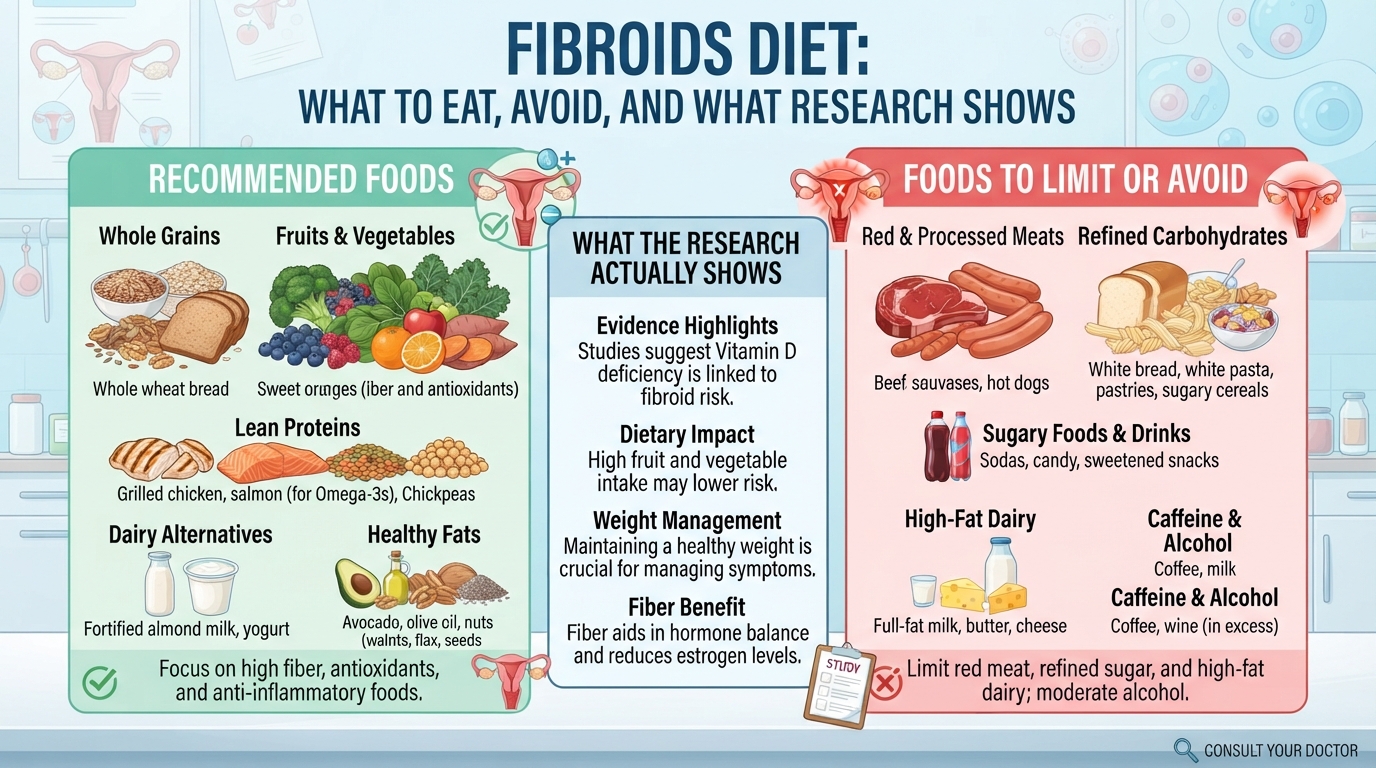
Vitamin D deficiency is the nutrient deficiency most consistently linked to uterine fibroids, and a 2023 evidence-based prevention framework (the “ESCAPE” approach) published in IJERPH recommends checking serum vitamin D levels and supplementing appropriately as a first-line preventive step, alongside green tea extract and reduced phthalate exposure. Good dietary sources include fatty fish (salmon, mackerel, tuna), egg yolks, fortified dairy or dairy alternatives, and fortified cereals — though most people with a diagnosed deficiency will need a supplement to reach therapeutic levels through food alone.
Fiber From Fruits, Vegetables, and Whole Grains
Fiber helps the body excrete excess estrogen through the gut rather than reabsorbing it. Apples, pears, citrus fruits, broccoli, cabbage, and other cruciferous vegetables show up specifically in the research: WebMD reports that a recent study found eating plenty of fruits like apples and tomatoes, and cruciferous vegetables like broccoli and cabbage, was linked to a lower risk of developing fibroids. Whole grains, legumes, and root vegetables round out a high-fiber pattern. If you’re tracking intake against a daily target, our food calorie calculator makes it easy to log these foods alongside everything else you eat.
Green Tea Extract (EGCG) — With Real Dosage Data
This is the single most under-covered topic in fibroid-diet content, and it’s backed by more rigorous clinical evidence than almost anything else on this list:
- A pilot randomized, double-blind, placebo-controlled trial gave 39 women with symptomatic fibroids either 800 mg/day of green tea extract or a placebo for four months. The results were striking: fibroid volume increased 24.3% in the placebo group, while the green tea extract group saw a significant 32.6% reduction in total fibroid volume, along with a 32.4% reduction in symptom severity and measurable improvement in anemia.
- A newer combination trial tested a lower daily dose — 150 mg EGCG plus 1,000 IU vitamin D3 and 5 mg vitamin B6 — for 16 weeks in women with fibroids ≥3 cm, and found it produced roughly a 13% reduction in mean fibroid volume, consistent with several earlier Italian studies using comparable formulations and durations.
- Mechanistically, Johns Hopkins researchers demonstrated that EGCG appears to reduce fibroid cell growth, with the study designed specifically to uncover the biochemical pathways behind that effect, while cautioning that people should not self-dose with over-the-counter supplements without medical guidance, since optimal dosing is still being studied in larger trials.
Important nuance: these are supplement-dose studies (150–800 mg of concentrated EGCG), not typical brewed-tea amounts — a cup of green tea contains roughly 50–100 mg of catechins, well below trial doses. If you want to explore this, it’s a conversation for your doctor, not a self-directed supplement purchase.
Lean Protein and Anti-Inflammatory Fats
A protein-adequate diet supports the stable blood sugar control discussed above and helps preserve muscle mass if you’re also working on body composition. Fatty fish, poultry, legumes, and eggs are reasonable staples; if you’re building a full day of eating around a specific calorie or protein target, our high-protein, low-calorie foods list is a practical reference point.
Foods and Habits That May Worsen Fibroids
High-Fat Dairy and Processed/Red Meat
Diets high in red and processed meat, along with high-fat dairy, have repeatedly shown associations with increased fibroid risk in the epidemiological literature, plausibly through added hormone content and saturated fat’s effect on estrogen metabolism. One frequently cited figure: consuming more than one daily serving of full-fat dairy has been linked to roughly a 32% increase in fibroid risk in cohort data, according to a summary of the research by USA Fibroid Centers, which draws on the same 2021 IJERPH review referenced above.
High-Glycemic and Ultra-Processed Foods
Refined carbohydrates, added sugars, and packaged snack foods spike insulin more sharply than whole-food carbohydrate sources. Given the insulin-resistance research discussed earlier, swapping high-glycemic staples (white bread, sugary cereal, soda) for lower-glycemic versions (oats, legumes, whole fruit) is one of the more evidence-aligned changes you can make, even though the insulin-fibroid link itself is still an active area of study rather than settled fact.
Alcohol and Excess Caffeine
Alcohol places additional load on the liver, which plays a role in metabolizing circulating estrogen. Most clinical guidance suggests moderating rather than eliminating caffeine and alcohol, since the evidence here is observational rather than interventional.
Soy and Phytoestrogens — A Nuanced Case
Soy contains phytoestrogens, plant compounds that weakly mimic estrogen in the body. The research on soy and fibroids is genuinely mixed: some researchers flag it as worth limiting given fibroids’ estrogen sensitivity, while other population studies (including work referenced in the Tinelli review) haven’t found a consistent harmful association, and soy isoflavones have even been studied for protective effects in other hormone-sensitive contexts. Rather than eliminating soy outright, most clinicians suggest moderate intake unless your doctor advises otherwise.
Sodium and Additives
Processed and packaged foods high in sodium and additives don’t have direct mechanistic links to fibroid growth the way estrogen and insulin pathways do, but they’re worth limiting for general cardiovascular and inflammatory health, both of which overlap with fibroid symptom burden.
The Missing Piece Most Fibroid Articles Skip: Weight Management
Almost every fibroid-diet article lists “foods to eat and avoid” without ever connecting it to the fact that body composition is one of the more consistently replicated risk factors in the research. If weight is part of your picture, the practical path isn’t a special “fibroid diet” separate from sound nutrition principles — it’s:
- Establish your baseline. Use our diet calculator to get your BMR, TDEE, and a goal-adjusted calorie target using the Mifflin-St Jeor equation.
- Understand where you’re starting from. Check your BMI for context, keeping in mind it’s a screening tool, not a diagnosis.
- Build a sustainable deficit if appropriate. Our calorie deficit guide walks through a realistic, muscle-preserving rate of loss rather than crash dieting, which can itself disrupt hormone balance.
- Structure the plan. If you’re new to this, our step-by-step guide to starting a diet plan covers the full process from goal-setting to grocery list.
This isn’t about chasing a number on the scale for its own sake — it’s that the same estrogen and insulin pathways driving fibroid growth are directly influenced by excess adipose tissue, which is exactly why the research above keeps surfacing BMI and HOMA-IR as independent risk markers.
A Sample Fibroid-Friendly Day of Eating
This is illustrative, not prescriptive — plug your own numbers from the diet calculator and adjust portions to hit your personal target.
| Meal | Example | Why it fits |
|---|---|---|
| Breakfast | Greek yogurt, berries, ground flaxseed, oats | Fiber + low-glycemic carbs + calcium |
| Lunch | Grilled salmon, quinoa, steamed broccoli | Vitamin D + fiber + lean protein |
| Snack | Apple with a small handful of walnuts | Fiber + omega-3s, low added sugar |
| Dinner | Chicken breast, roasted sweet potato, sautéed cabbage | Lean protein + fiber + low-glycemic carb |
| Beverage | Green tea (in place of a sugary drink) | Source of EGCG, though below trial-level doses |
Log any of these against your daily targets using the food calorie calculator, and pair the eating pattern with full-body strength training two to four times a week to support insulin sensitivity and healthy body composition — both of which tie back to the mechanisms above.
Clinical-Trial Supplement Dosages at a Glance
Most fibroid-diet articles mention “green tea may help” without ever citing the actual doses used in research. Here’s what the published trials used — again, for discussion with your doctor, not self-prescription:
| Compound | Dose Used in Trials | Study Duration | Result |
|---|---|---|---|
| Green tea extract (EGCG) | 800 mg/day | 4 months | 32.6% reduction in fibroid volume vs. 24.3% increase in placebo group |
| EGCG + Vitamin D3 + B6 | 150 mg EGCG, 1,000 IU D3, 5 mg B6 | 16 weeks | ~13% reduction in mean fibroid volume |
What Diet Cannot Do
It’s worth being direct: no food, supplement, or eating pattern has been shown to eliminate an existing fibroid or replace medical treatment. Diet’s realistic role is (1) supporting healthy estrogen metabolism, (2) potentially slowing growth or easing symptoms alongside medical care, and (3) reducing modifiable risk factors like excess body fat and insulin resistance for the future. If you have heavy bleeding, significant pain, rapidly growing fibroids, or fertility concerns, see a gynecologist for imaging and a treatment plan — diet is a complement to that care, not a substitute for it.
Frequently Asked Questions
Can diet shrink existing fibroids? Diet alone hasn’t been shown to reliably shrink existing fibroids, though some clinical trials of concentrated green tea extract (EGCG) have shown measurable volume reductions over several months. Whole-food dietary changes are better supported as a long-term risk-reduction and symptom-management strategy than a treatment for existing growths.
Is dairy bad for fibroids? The evidence is mixed by fat content. High-fat dairy has been associated with increased fibroid risk in some cohort studies, while low-fat dairy, particularly options containing probiotics, hasn’t shown the same association and may even be protective in some research.
Should I avoid soy if I have fibroids? Not necessarily. Soy contains phytoestrogens, and some clinicians suggest moderation given fibroids’ estrogen sensitivity, but the population-level evidence for harm is inconsistent. Moderate intake is a reasonable middle ground absent specific medical advice to the contrary.
Does sugar make fibroids worse? There’s no proof that sugar directly causes fibroid growth, but high-sugar, high-glycemic diets are linked to insulin resistance, which several recent studies associate with increased fibroid risk and prevalence. Reducing added sugar is a reasonable, low-risk step.
How much green tea would I need to drink to get a clinical effect? Trial doses (150–800 mg of concentrated EGCG) are well above what you’d get from casually drinking tea, which contains roughly 50–100 mg of catechins per cup. Reaching trial-level doses would require a supplement, which should only be done under medical supervision.
Does losing weight help with fibroids? Possibly. Excess adipose tissue produces additional estrogen, and multiple studies link both BMI and insulin resistance to fibroid prevalence. A gradual, sustainable weight-management approach — not crash dieting — may support hormonal balance if you’re carrying excess weight.
This article is for general educational purposes and isn’t a substitute for medical advice. Always consult your doctor or a registered dietitian before making significant dietary changes, especially if you have a diagnosed fibroid or are considering supplements like EGCG or vitamin D.
Sources
- Tinelli A, et al. Uterine Fibroids and Diet. Int J Environ Res Public Health, 2021.
- Evidence-Based Approach for Secondary Prevention of Uterine Fibroids (ESCAPE Approach), IJERPH, 2023.
- Targeting fibrotic signaling pathways by EGCG as a therapeutic strategy for uterine fibroids, Scientific Reports, 2023.
- New Study Using Human Fibroid Cells Supports Use of Green Tea Compound as Treatment for Uterine Fibroids, Johns Hopkins Medicine, 2023.
- Green Tea Extract, Vitamin D, and Vitamin B6 Combination for the Treatment of Uterine Leiomyoma, 2025.
- FRIEND trial protocol: EGCG for fibroids and unexplained infertility, BMJ Open, 2024.
- Diabetes and Uterine Fibroid Diagnosis in Midlife (SWAN Study), J Clin Endocrinol Metab, 2024.
- The association of insulin resistance and obesity with uterine fibroids in non-diabetic populations, Scientific Reports, 2025.
- Selected metabolic parameters and the risk for uterine fibroids, International Journal of Gynecology & Obstetrics.
- Fibroids Diet — Healthline
- Uterine Fibroids Dos & Don’ts — WebMD
- Fibroids Diet: The Best & Worst Foods For Fibroids — USA Fibroid Centers