
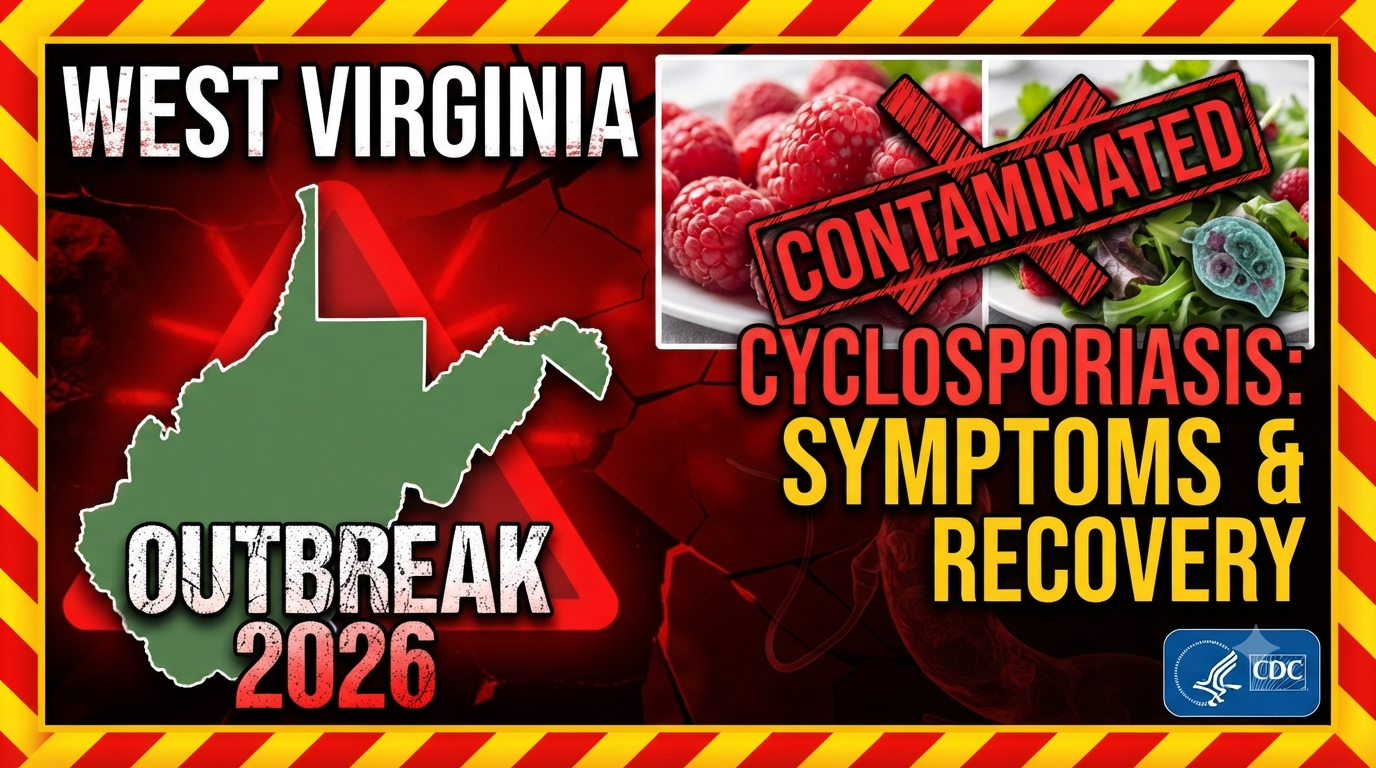
West Virginia is in the middle of a real, ongoing public health story this summer, and it’s one worth paying attention to if you live in the Mountain State or care about food safety. The West Virginia cyclosporiasis outbreak has pushed case counts far above normal, prompted a statewide health advisory, and tied into a much larger multistate investigation led by the CDC. If you’ve been searching for what’s going on, what the symptoms feel like, and — just as important — what to eat while your gut recovers, this guide covers it all.
Table of Contents
What Is the West Virginia Cyclosporiasis Outbreak?
As of mid-July 2026, the West Virginia Department of Health’s Office of Epidemiology and Prevention Services has confirmed a statewide outbreak of cyclosporiasis, an intestinal illness caused by the microscopic parasite Cyclospora cayetanensis. In a typical year, the state sees around nine cases total. This year, case counts have already climbed into the high 60s, with several people hospitalized, and most cases clustered in counties along the state’s western border.
This isn’t just a West Virginia problem. According to the CDC’s cyclosporiasis surveillance data, more than 1,600 lab-confirmed domestic cases had been reported nationwide as of July 13, 2026, with thousands more cases under review across dozens of states. Investigators have not yet pinpointed a single produce grower, distributor, or supplier responsible for the spike. That’s part of what makes this outbreak tricky — the incubation period for Cyclospora can stretch from two days to two weeks, which makes it hard to trace back to one meal or one product.
What Causes Cyclosporiasis?
Cyclospora spreads when people consume food or water contaminated with feces containing the parasite. It is not spread person-to-person, since the parasite needs time in the environment to mature before it becomes infectious. Historically, U.S. outbreaks have been linked to imported or domestic fresh produce, including:
- Fresh raspberries
- Basil and cilantro
- Snow peas
- Bagged salad mixes and mesclun lettuce
- Parsley
No commercially frozen or canned produce has ever been implicated in a Cyclospora outbreak, which is a helpful detail if you’re trying to decide what’s safe to keep in your kitchen right now. You can read the CDC’s full breakdown of transmission on their About Cyclosporiasis page.
Cyclosporiasis Symptoms to Watch For
Symptoms of cyclosporiasis usually show up about a week after exposure, though the range can run from two days to over two weeks. Common symptoms include:
- Watery, sometimes explosive diarrhea
- Nausea and loss of appetite
- Stomach cramping
- Fatigue and low-grade fever
- Bloating and gas
Without treatment, symptoms can linger for weeks and may even relapse. If you’ve had ongoing digestive issues this summer and haven’t traveled internationally, it’s worth mentioning cyclosporiasis specifically to your doctor, since it requires targeted lab testing and is treated with a specific antibiotic course.
How to Lower Your Risk
The CDC’s official prevention guidance and West Virginia health officials recommend a few practical steps that go a long way:
- Wash all fresh produce thoroughly, especially berries, leafy greens, and fresh herbs.
- Avoid untreated water from lakes, streams, or unverified sources.
- Practice consistent hand hygiene, particularly after using the bathroom and before preparing food.
- Cook produce when possible instead of eating it raw during periods of active outbreak advisories.
- Stay alert to local health department updates, since case counts and advisories are changing week to week.
Eating and Rehydrating While You Recover
This is where diet plays a bigger role than most people realize. Cyclosporiasis can drain your body of fluids and nutrients fast, and what you eat during recovery can make the difference between a rough few days and a rough few weeks. A few general, non-medical guidelines that tend to help with any prolonged diarrheal illness:
- Prioritize fluids and electrolytes. Water alone isn’t always enough — broths, oral rehydration solutions, and electrolyte drinks help replace what you’re losing.
- Ease back in with bland, low-fiber foods. Think rice, bananas, toast, and plain potatoes before reintroducing heavier meals.
- Skip the culprits while you’re healing. High-fat, high-fiber, and heavily spiced foods can aggravate an already irritated gut.
- Reintroduce produce carefully. Once you’re cleared to eat normally again, cooked vegetables are gentler than raw ones as your digestive system resets.
- Track your intake. If you’re recovering from a prolonged GI illness, keeping tabs on your calorie and hydration needs can help you avoid unintentional weight loss or nutrient gaps during the recovery window.
That last point is exactly the kind of thing a simple daily diet tracker can help with. Use our free daily diet calculator to check your baseline calorie, protein, and fluid targets — it makes it much easier to notice when recovery is on track versus when you might need to check back in with a doctor.
Frequently Asked Questions
Is the West Virginia cyclosporiasis outbreak still active in 2026? Yes. As of mid-July 2026, the West Virginia Department of Health considers this an active, ongoing statewide outbreak, with case counts updated weekly.
How many cyclosporiasis cases have been reported in West Virginia? Case counts have climbed into the high 60s as of mid-July 2026, a sharp jump from the typical nine cases per year, with a handful of hospitalizations reported. Nationally, the CDC has confirmed over 1,600 domestic cases since May 1, 2026.
Can cyclosporiasis spread from person to person? No. It spreads through contaminated food or water, not through casual or direct contact with an infected person.
What foods are most commonly linked to cyclosporiasis outbreaks? Historically, fresh raspberries, basil, cilantro, snow peas, and bagged salad or lettuce mixes have been the most common sources in U.S. outbreaks.
How long do cyclosporiasis symptoms last? Untreated, symptoms can last for several weeks and may relapse. Treatment with the appropriate antibiotic typically shortens the illness significantly.
The Bottom Line
The West Virginia cyclosporiasis outbreak is a good reminder that food safety and gut health go hand in hand. Wash your produce, stay alert to local health advisories, and if you do get sick, focus on rehydration and gentle, trackable nutrition while your body recovers. Keeping an eye on your daily intake — fluids, electrolytes, and calories — isn’t just for weight management; it’s one of the simplest tools you have for bouncing back from an illness like this one.
This article is for general informational purposes and is not a substitute for medical advice. If you’re experiencing persistent gastrointestinal symptoms, contact a healthcare provider.
Sources
- West Virginia Office of Epidemiology and Prevention Services – Cyclosporiasis Outbreak
- CDC – About Cyclosporiasis
- CDC – Preventing Cyclosporiasis
- CDC – Cyclosporiasis Surveillance Data
Track your recovery nutrition: Try the free Daily Diet Calculator →