Struggling to stick to a diet plan usually isn’t about willpower — it’s about stress, sleep, mood, and the habits that come with them. That’s why more people are pairing teletherapy mental health care with the same discipline they bring to tracking calories and macros. Online therapy has moved from a pandemic-era workaround to a mainstream, evidence-backed way to get support, and it turns out mental health and nutrition are more connected than most people realize.
In this guide, we’ll break down what teletherapy actually is, why it’s growing so quickly, and — since you’re here on a nutrition site — how looking after your mental health can make your diet and weight-loss goals a lot more sustainable.
Table of Contents
What Is Teletherapy?
Teletherapy (also called telemental health or online therapy) is mental health care delivered through video calls, phone calls, or secure messaging instead of an in-person office visit. Sessions cover the same ground as traditional therapy — anxiety, depression, stress management, grief, relationship issues — just through a screen instead of a waiting room.
According to the National Institute of Mental Health, it’s become increasingly common for patients and providers to connect virtually through video, phone, text, or email, and many insurance plans now cover these visits the same way they cover in-person care. The U.S. Department of Health and Human Services notes that behavioral telehealth visits can include everything from routine mental health screenings to medication management and ongoing anxiety or depression monitoring — not just a one-off check-in.
Why Teletherapy Is Growing So Fast
A few forces are driving the shift toward virtual care:
- Access. A large share of U.S. counties are designated mental health professional shortage areas, and average wait times for a first appointment can stretch into weeks. Teletherapy widens the pool of providers a person can actually reach.
- Convenience. No commute, no waiting room, and sessions that fit around work or family schedules.
- Comfort and satisfaction. Independent surveys have repeatedly found that a large majority of people who try teletherapy report being satisfied with the experience, and research reviewed by the National Institutes of Health has found telemental health to be about as effective as in-person care for common conditions like depression and anxiety.
- Cost and flexibility. Many platforms offer sliding-scale pricing or async messaging options that are cheaper than a traditional practice.
None of this means teletherapy is a fix for everyone or every condition — severe or crisis-level symptoms still need in-person or emergency care — but for routine anxiety, stress, and mood support, it’s become a legitimate first option rather than a fallback.
The Overlooked Link Between Mental Health and Your Diet
Here’s the part that doesn’t get talked about enough on most therapy-focused content: what you eat directly affects how you feel, and how you feel directly affects what you eat.
Researchers now use the term nutritional psychiatry to describe this two-way relationship. As Harvard Health explains, roughly 95% of the body’s serotonin is produced in the gut, and the gut’s lining is packed with neurons that communicate directly with the brain — which is why diets high in refined sugar have been linked to worse mood regulation and even worsened depressive symptoms. A review published in the National Library of Medicine describes this gut-brain axis as the biological foundation for why nutrition is increasingly treated as part of mental health care, not separate from it. The American Society for Nutrition points specifically to Mediterranean-style eating patterns — rich in vegetables, whole grains, olive oil, and lean protein — as one of the more promising dietary patterns studied for supporting mood.
In practice, this means a therapist working on your stress or anxiety, and a nutrition plan built around whole foods and consistent tracking, are pulling in the same direction — not two unrelated projects.
How Stress and Emotional Eating Sabotage Weight Loss Goals
If you’ve ever hit a stressful week and watched your calorie tracking fall apart, you already know this cycle:
- Stress or low mood triggers cravings for high-sugar, high-fat “comfort” foods.
- Eating those foods causes blood sugar spikes and crashes, which worsen mood and energy.
- The guilt or frustration that follows makes it harder to get back on track — so the pattern repeats.
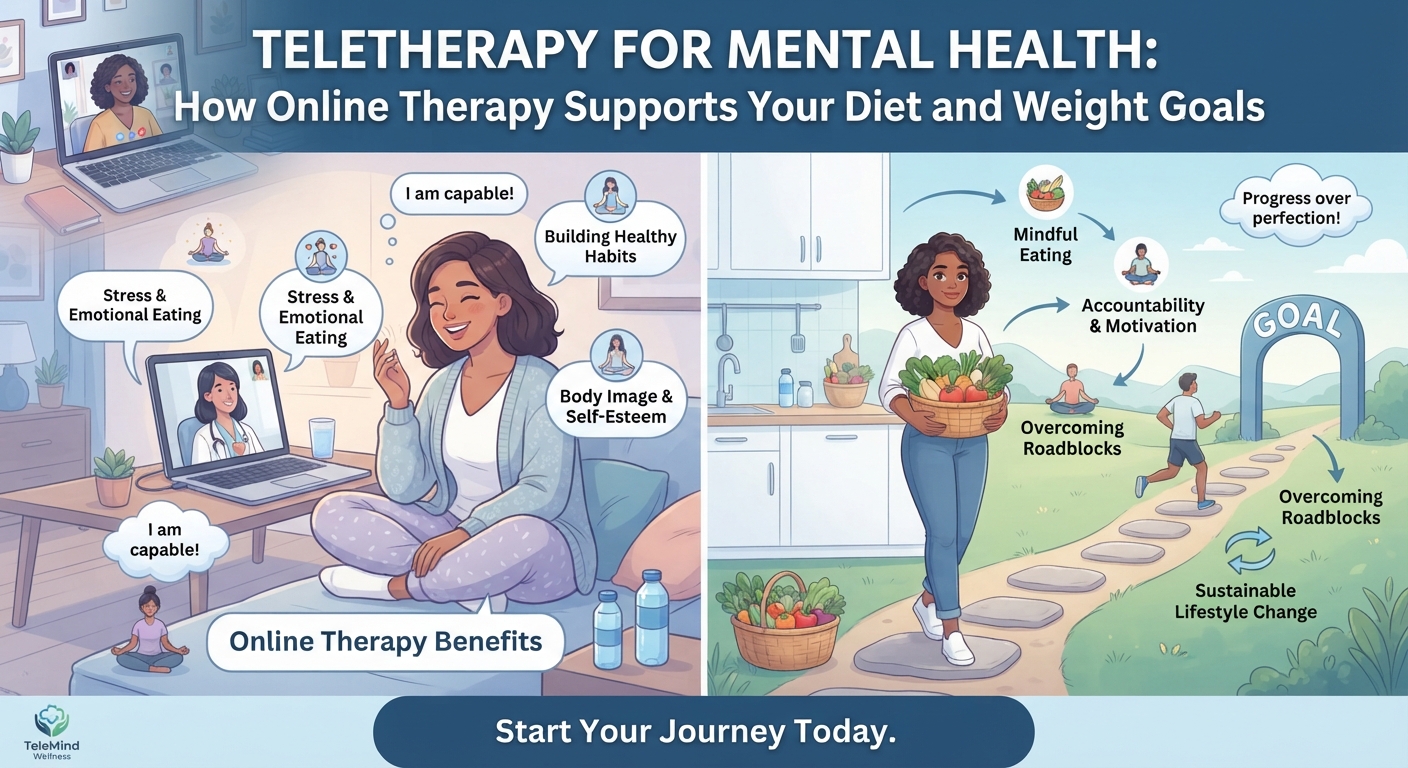
Teletherapy won’t replace a calorie or macro tracker, but it can help you build the coping skills — like recognizing emotional hunger versus physical hunger, or managing stress without food — that make it easier to actually stick to a plan long-term. If you’re using our calorie calculator to set a daily target, therapy is often what makes hitting that target sustainable instead of a constant fight.
Combining Teletherapy with Nutrition Tracking for Better Results
A few practical ways to pair the two:
- Track mood alongside food. Many people notice patterns — like stress-eating in the evenings — only once they log both. Pair your food log with a quick daily mood note.
- Bring your numbers into sessions. If you’re using a BMI calculator or calorie tracker to set goals, share the plan with your therapist. Unrealistic targets are a common source of diet-related anxiety, and a therapist can help you set goals that feel achievable rather than punishing.
- Swap comfort-food routines for planned ones. Instead of eliminating comfort eating outright, therapy can help you build a short list of go-to meals — like a low-calorie chicken salad — that satisfy the craving without derailing your goals.
- Use therapy to address the “why,” not just the “what.” A meal plan tells you what to eat. Teletherapy is where you work through why you reach for food when you’re anxious, bored, or overwhelmed in the first place.
What to Look for in a Teletherapy Provider
- Licensing in your state or country. Providers should be licensed to practice where you’re physically located, not just where they’re based.
- A secure, HIPAA-compliant (or regionally equivalent) platform for video and messaging.
- A free intro call, if offered, to check whether the therapist’s style is a good fit before committing.
- Experience with your specific concern — stress, anxiety, disordered eating patterns, or general mood support — since therapists often specialize.
If cost or access is a barrier, community mental health centers and the SAMHSA treatment locator can help identify lower-cost or sliding-scale telehealth options.
FAQ: Teletherapy and Mental Health
Is teletherapy as effective as in-person therapy? For common concerns like anxiety, depression, and stress, research has generally found outcomes comparable to in-person care. More severe or crisis situations may still need in-person or emergency support.
Does insurance cover teletherapy? Many insurance plans now cover telemental health the same way they cover in-person visits, but coverage varies by provider and plan — it’s worth confirming before booking.
Can therapy actually help with weight loss? Not directly, but it can address the stress, emotional eating, and unrealistic goal-setting that often derail diet plans — which is why pairing it with tools like a calorie calculator tends to work better than either approach alone.
How do I get started? Most platforms let you fill out a short intake form about your concerns and preferences, then match you with a licensed provider — often with a first appointment available within days rather than weeks.
The Bottom Line
Teletherapy has made professional mental health support more accessible than it’s ever been — and for anyone working on their diet or weight goals, it’s worth treating as part of the same plan, not a separate one. Stress, mood, and sleep all shape what and how much we eat, and getting real support for those areas tends to make nutrition goals a lot easier to sustain.
If you’re ready to pair the two, start by setting a realistic target with our calorie calculator or BMI calculator, and consider looking into a licensed teletherapy provider to help you stick with it.