

For “how many calories should i eat to lose weight,” your body and routine matter most. No single calorie target works for everyone.
A calorie calculator can estimate your needs. Then choose a manageable calorie deficit to support weight loss, and adjust your plan as you go. Steady, health-supporting habits matter more than a perfect number or rapid weight loss.
Key Takeaways
- Calorie needs vary from person to person.
- A calorie estimate is a useful starting point, not a fixed rule.
- A manageable calorie deficit can support weight loss.
- Adjust your approach as your needs and progress change.
- Consistent habits are more helpful than chasing rapid results.
how many calories should I eat to lose weight
Your target for daily calories depends on the energy your body uses and your weight goals. Your body needs energy for breathing, work, home tasks, and exercise. An estimate gives you a starting point, not a strict rule.
Why Calorie Needs Differ From Person to Person
People have different routines, bodies, and health needs. Age, sex, height, current weight, and activity level can affect daily calorie needs. Health conditions, medications, pregnancy, and life changes can also affect calorie needs.
How Age, Sex, Height, Weight, and Activity Affect Daily Calories
A taller person or someone with more body weight may use more energy for basic functions. Regular movement and exercise can raise the daily calories your body burns. Age and sex can shape calorie needs, but each person is unique.
Use calorie estimates as a guide, then adjust as you learn what works for you. If you have a medical condition or special nutrition needs, ask a qualified health professional for support.
Estimate your daily calorie needs
A starting estimate can help you plan weight loss with more confidence. A calculator gives guidance, not a fixed rule for your body’s needs.
Use a calorie calculator to estimate calories to maintain weight
Enter your age, sex, height, weight, and usual activity level into a trusted calorie calculator. Accurate details make the estimate more useful. A calorie intake calculator may show calories that help maintain your current weight.
Understand your total daily energy needs
Your total daily energy expenditure includes energy used at rest, during digestion, and through movement and exercise. This helps explain why calorie requirements vary from person to person.
Treat the result as an estimate. Compare it with your weight and energy levels over several weeks. These trends can help you decide if the estimate fits your daily life.
Create a calorie deficit for weight loss
Weight loss often happens when your body uses more energy than you eat over time. This gap is a calorie deficit. Small, steady changes can create one without making meals feel like a test of willpower.
How calorie intake affects weight loss
You can lower calorie intake, increase activity, or combine small changes in both. Your weight loss calorie intake is personal. Your needs depend on body size, daily movement, and health.
Scale weight can change daily because of water, digestion, and other short-term changes. One weigh-in cannot show your plan’s full effect. Watch patterns over time instead.
Choose a sustainable calorie deficit
A moderate calorie deficit is a common starting point, but the right amount varies. It depends on your needs and starting point. A smaller, lasting change may beat sharp cuts that leave you tired or hungry.
Extreme restriction can make it hard to get enough nutrients and keep your energy up. A calorie deficit for weight loss should support daily life, and seek advice from a health professional if you have a medical concern.
| Approach | How it can help | What to keep in mind |
|---|---|---|
| Reduce portions or choose lower-calorie options | May lower daily calorie intake | Keep meals satisfying and nutrient-rich |
| Add regular movement | Can raise the energy your body uses | Choose activity you can sustain |
| Combine small food and activity changes | Can create a gradual calorie deficit | Adjust based on energy, health, and progress |
Set a realistic daily calorie intake
Start with your estimated maintenance calories. Subtract your chosen weight-loss deficit to find a practical daily calorie intake. Aim for steady progress while eating enough to support your health and daily needs.
Adjust your target based on your progress and energy levels
Watch your weight trend for several weeks, not just one day. Also notice hunger, mood, energy, sleep, and exercise performance. These signs show whether your target feels workable.
If your weight or routine changes, your needs may shift. Adjust your target when needed, then give each change time before judging its effect. Your optimal daily calorie intake should support gradual progress without leaving you drained.
Why very low calorie targets may not be appropriate
Very low calorie plans can make it hard to get enough nutrients and energy. They may not suit everyone or be safe without professional supervision.
If you have a history of disordered eating or a health condition, seek qualified health advice. Individual guidance can help you choose a daily calorie intake that fits your needs.
Account for calories burned and activity
Your daily energy needs include more than workouts. Your calories per day may change with walking, chores, an active job, and exercise. Small movements throughout the day count, too.
How movement and exercise affect calorie requirements
More movement can raise the calories burned in a day. Someone who stands for hours may use more energy than someone who sits, even without formal exercise.
Use activity estimates as a guide, not an exact measure
Calculators use broad activity levels, while watches and machines estimate energy from limited data. Your actual burn can vary with body size, pace, fitness, and activity type. Use these numbers as context, not a promise.
A device may overstate exercise calories, so do not eat them all back automatically. Watch your long-term weight trend, hunger, and energy to see if your calorie plan fits.
| Activity estimate | What it can tell you | What to keep in mind |
|---|---|---|
| Daily movement | How active your usual routine is | Steps and chores vary from day to day |
| Exercise device | A rough estimate for a workout | Reported calories burned may be too high |
| Progress over time | Whether your calories per day support your goal | Consider weight trends and well-being together |
Build satisfying meals within your calorie target
Filling meals can make a calorie target easier to follow. Build meals with protein, produce, and whole grains. These foods help you feel full and meet your nutrient needs.
Your caloric needs for weight loss depend on your body and activity level. Choose foods and portions that work for you.

Prioritize protein, fiber, and nutrient-dense foods
Eggs, yogurt, fish, tofu, and lentils provide protein. Add fiber with vegetables, fruit, beans, or whole grains like oats and brown rice. These foods provide key nutrients and can make meals more satisfying.
Preferences and dietary needs differ. Choose options you enjoy and can prepare with ease.
Make room for foods you enjoy
Food rules can make a plan hard to follow. Your calorie consumption for weight loss can include favorite foods in reasonable portions. Choose a pattern that feels satisfying, supports your health, and fits your daily life.
| Meal element | Examples | Why it helps |
|---|---|---|
| Protein | Eggs, yogurt, fish, tofu, or lentils | Supports fullness and helps meet nutrient needs |
| Fiber-rich foods | Vegetables, fruit, beans, or oats | Adds fiber and variety to meals |
| Enjoyment | A favorite food in a reasonable portion | Makes the plan more flexible and sustainable |
Track your calorie intake without losing perspective
Tracking can show what supports your goals without taking over your day. Choose a method that feels useful and easy to keep using.
Choose a calorie tracker or another tracking method
A calorie tracker can log meals and estimate totals. A food log, meal photos, or a simple eating record can show patterns without focusing on numbers.
App entries, portion estimates, restaurant meals, and food labels may not be exact. Treat the total as an estimate, not a precise measure of what you ate.
Use calorie counting to spot patterns, not chase perfection
Use calorie counting to notice skipped meals, frequent snacks, or portions that leave you hungry. A record can guide small changes without turning each number into a pass-or-fail score.
Calorie restriction should not harm your well-being. If tracking feels stressful or triggers unhealthy thoughts, try a less number-focused approach. Speak with a health professional.
Adjust your calorie plan as your weight changes
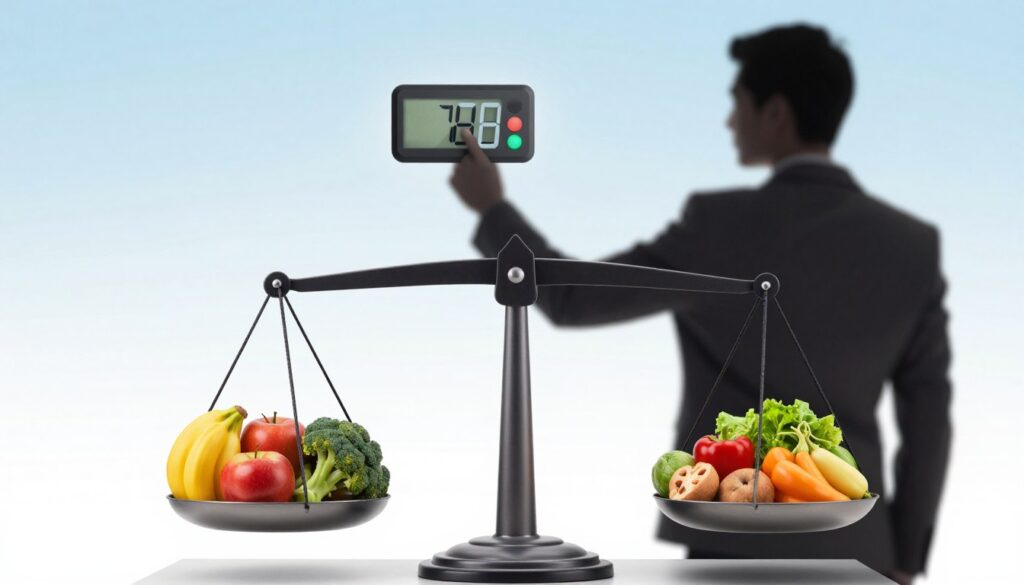
Your calorie needs can change as your weight, activity, health, or routine changes. An old estimate may become less useful over time. Review your plan after a major change, or when progress and energy no longer match your goals.
When to recalculate your daily calorie needs
Recheck your calories needed when your body weight or activity level changes in a lasting way. Your needs may differ when you want to maintain weight, lose weight, or gain weight.
How to respond to a weight-loss plateau
A few days of scale readings do not show that progress has stopped. Check weight trends across several weeks. Before changing your target, review portion sizes, meal consistency, activity, sleep, and stress.
If the trend still misses your goal, make a small adjustment and give it time. Small, steady changes can help you stay energized and keep your plan practical.
Conclusion
Use a weight loss calorie calculator to estimate calories needed to maintain your weight. Use this as a starting point, because calorie needs change with your routine and health.
Choose a modest calorie deficit you can sustain. Build meals around filling, nourishing foods and include foods you enjoy, so the plan feels realistic.
Track your progress over time, including your energy and hunger. If results stall, make small adjustments rather than cutting calories sharply.
Steady habits matter more than perfect numbers. Focus on your health, stay consistent, and seek support from a health professional when needed.